Habit building
How to build habits that actually stick
Most habits fall apart by week two. Here's how to design one that survives: small steps, visible progress, and a story worth returning to.
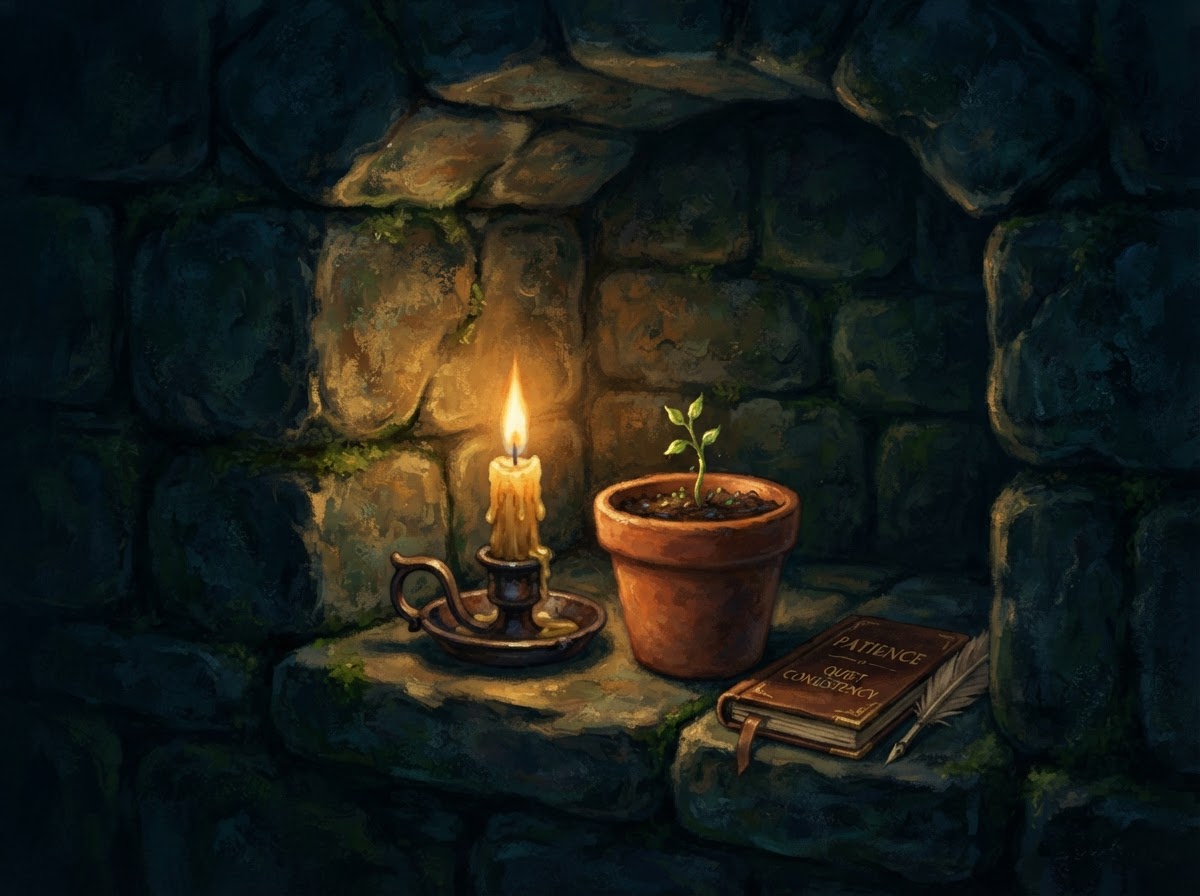
Most new habits fall apart around week two. Not because you lack discipline, but because the habit was designed to fail. It was too big, too vague, or too dependent on feeling ready. Building habits that stick is a design problem, and the good news is it has a known shape.
Why habits fall apart
A habit fails when the daily action is bigger than your daily motivation. The bigger the step, the more days it loses. Habits that stick are the ones small enough to survive a bad day, and visible enough to reward showing up.
- Too big: "exercise for an hour" loses to "too tired today."
- Too vague: "be healthier" has no next step to take.
- Too dependent on motivation: it only works on good days.
Start with one, and make it tiny
Pick one habit. Just one. Then shrink the daily version until it's almost too easy to skip. "Read one page." "Write one sentence." "Lace up the shoes." The tiny version isn't the ceiling, it's the floor. On good days you'll do more. On hard days you'll still show up, and showing up is what builds the habit.
Attach it to something you already do
Habits need a trigger. The most reliable triggers are things you already do without thinking: your morning coffee, the walk after lunch, brushing your teeth at night. Stack the new tiny habit right after an existing one, and the existing action becomes the reminder.
Make progress visible
Invisible progress is easy to abandon. A streak, a map, a checked box, anything that shows the chain of days you showed up, turns effort into evidence. Seeing the chain makes you reluctant to break it, which is exactly the nudge a young habit needs.
Expect the dip, and plan for it
Somewhere around day 10 to 14, the novelty fades and the habit gets hard. This is the dip, and it's where most people quit. Expect it. Plan a smaller step for dip days. Decide in advance that a missed day isn't failure, it's a signal to return tomorrow.
The 30-day quest structure
Thirty days is long enough to feel a habit take shape and short enough to stay engaging. Unwritten Quest is built around a 30-day adventure: each day a small quest, each week a checkpoint to reflect and adjust. By the end, you haven't just done a habit, you've walked a story.
How Unwritten Quest helps
Unwritten Quest turns one habit into a 30-day quest. Daily quests keep the step tiny, a visual map makes progress visible, and weekly checkpoints help you plan for the dip. Elara nudges you back on the hard days, so the habit survives the week where most habits die.
Frequently asked questions
Make one of those “someday” plans happen.
Small, guided solo adventures that help you practise doing more on your own — at your own pace.
The seven-quest pack is coming soon · One-time €19 · No subscription
Keep reading
Related guides
Motivation
How to stay motivated to reach your goals
Motivation fades — systems don't. Keep going on the goals you keep postponing with small daily quests, reflection, and a little story.
7 min read
Habit tracking
The gamified habit tracker app that turns goals into quests
Checkbox habit trackers fade fast. Here's what makes a gamified habit tracker worth coming back to — and how Unwritten Quest approaches it.
6 min read
Journaling
The benefits of journaling for goal achievement
Writing down your goals makes you more likely to reach them. Here's what the research says about journaling, focus, and follow-through.
7 min read